How it started
How it's going











Yassine
Benabbas
DevRel engineer @ Worldline
Teacher ( yostane.github.io/lectures )
Lille Android User Group
Video game collector
@yostane




blog.worldline.tech
@TechAtWorldline
@techatworldline.bsky.social
@worldlinetech


Web Assembly (WASM)
- Portable binary instruction format
- Initially targeted for web browsers (to speed up JS)

00 61 73 6d 01 00 00 00  01 05 01 60 00 01 7f 03  |.asm.......`....|
  02 01 00 07 16 01 12 67  65 74 55 6e 69 76 65 72  |.......getUniver|
  73 61 6c 4e 75 6d 62 65  72 00 00 0a 06 01 04 00  |salNumber.......|
  41 2a 0b 00 0a 04 6e 61  6d 65 02 03 01 00 00     |A*....name.....|
Browser


WASM
runtime
JS engine


Based on: https://wasmlabs.dev/articles/docker-without-containers/
WASM on the web

Source code



...
Compiler / WASM toolchain


wasm-pack
...


WASM binary
Glue code

Need to do something related to WASM



.NET and WASM
- .NET: C# OSS cross-platform framework
- Compiles to WASM
- Blazor WASM: Client framework (like VueJS)
- wasm-tools: Vanilla approach


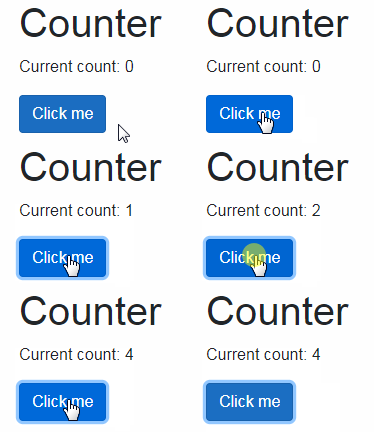
@page "/counter"

  <h1>Counter</h1>
  <p>Current count: @currentCount</p>
  <button @onclick="IncrementCount">Click me</button>

  @code {
      private int currentCount = 0;
      private void IncrementCount() { currentCount++; }
  }
Blazor wasm
public partial class MyClass
  {
      [JSExport]
      internal static string Greeting()
      {
          var text = $"Hello, {GetHRef()}";
          Console.WriteLine(text);
          return text;
      }

      [JSImport("window.location.href", "main.js")]
      internal static partial string GetHRef();
  }
setModuleImports('main.js', {
window: {
location: {
href: () => globalThis.window.location.href
}
}
});
const text = exports.MyClass.Greeting();
console.log(text);.NET 7+
wasm-tools

Let's port a .NET game !


Game porting
- Make a game run in platforms other than its original ones
- By rewriting / adapting the source code for the new platform(s)
- Not porting: virtual machine or emulator
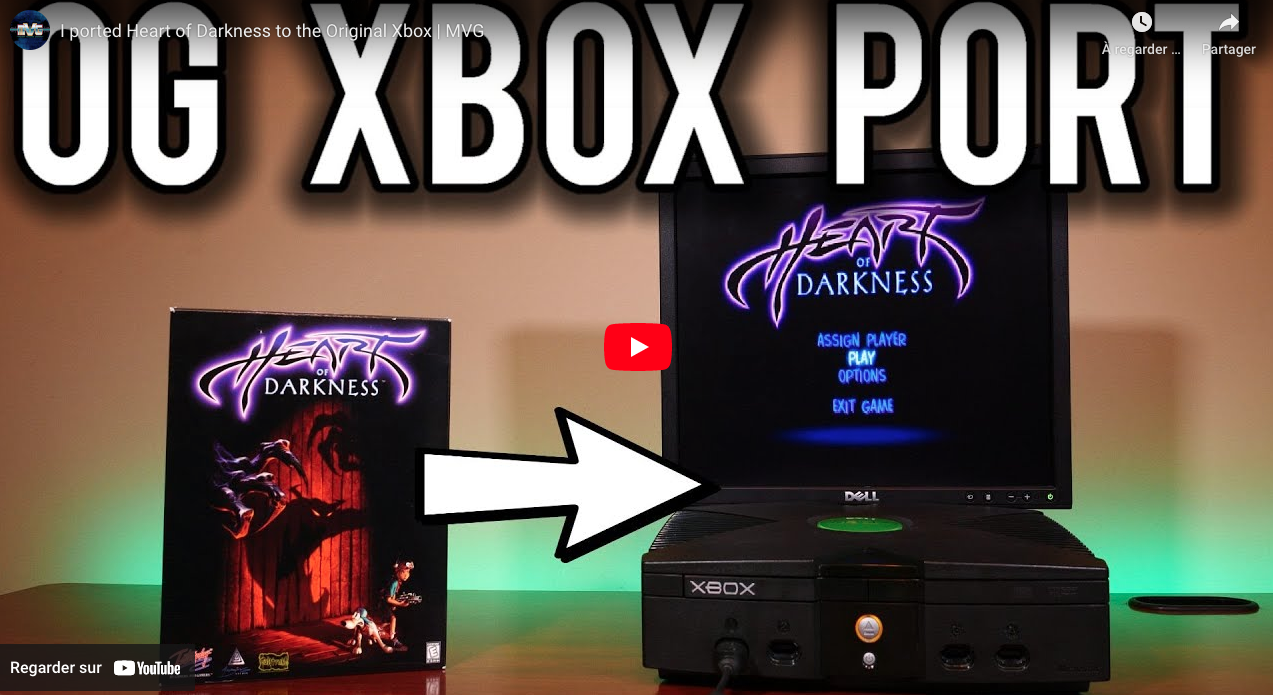
MVG's video is a great source of inspiration
1993 for DOS

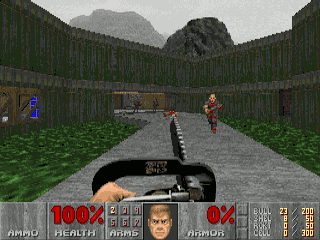
🌟Doom is portable by design🌟
+

Engine
Resources

sf2
wad
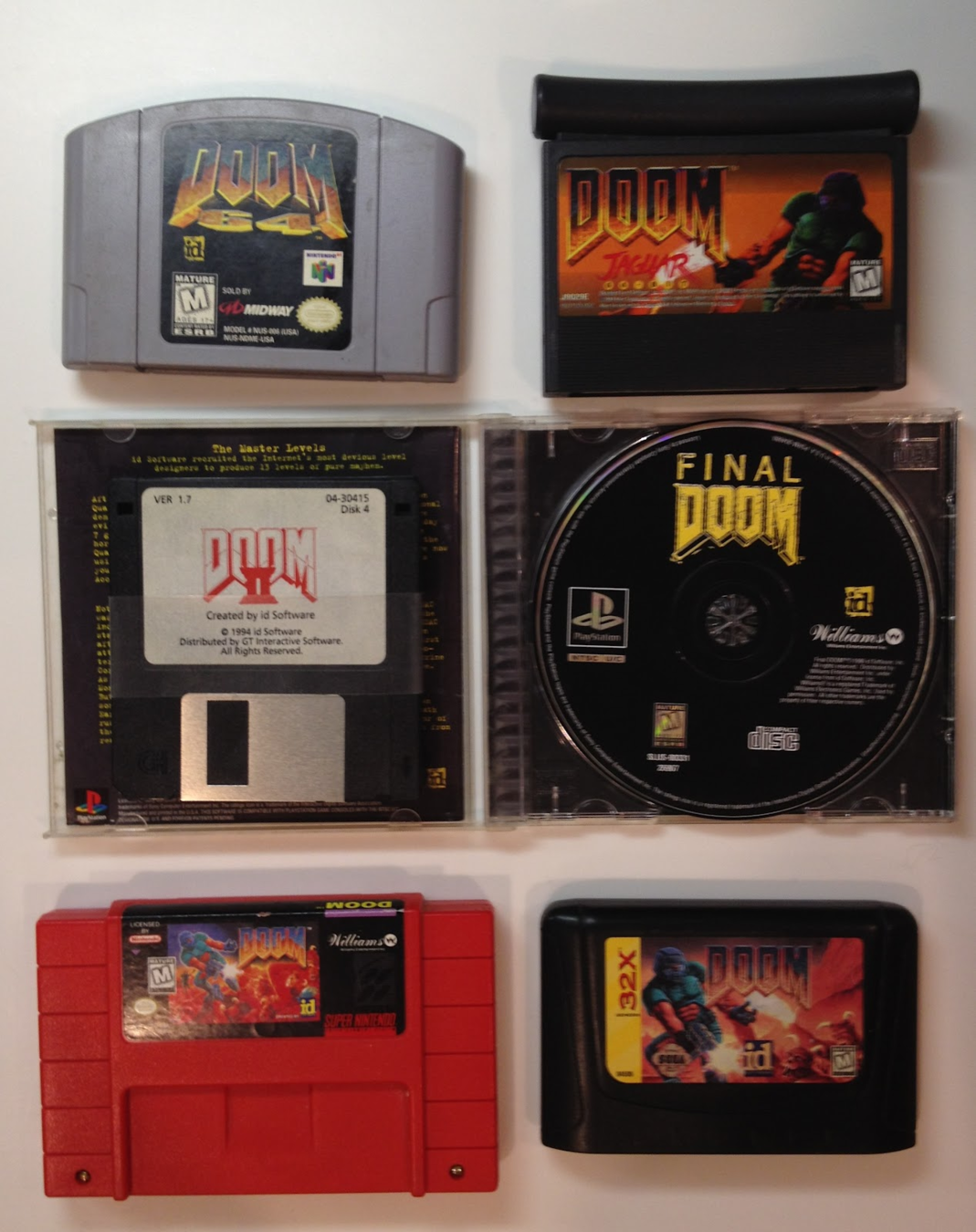
http://mrglitchsreviews.blogspot.com/2012/09/doom-console-ports.html
Ported to a LOT of platforms
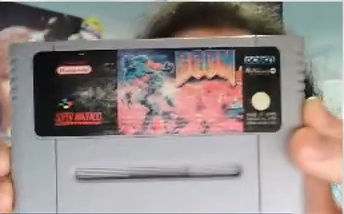
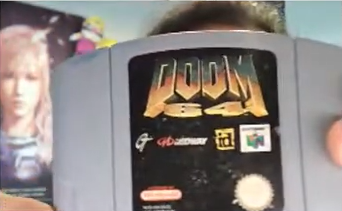
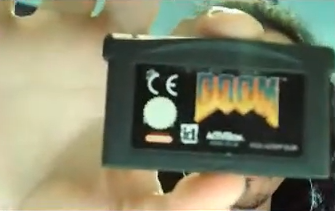
25 official licensed ports https://www.thegamer.com/doom-how-many-platforms-ports-consoles
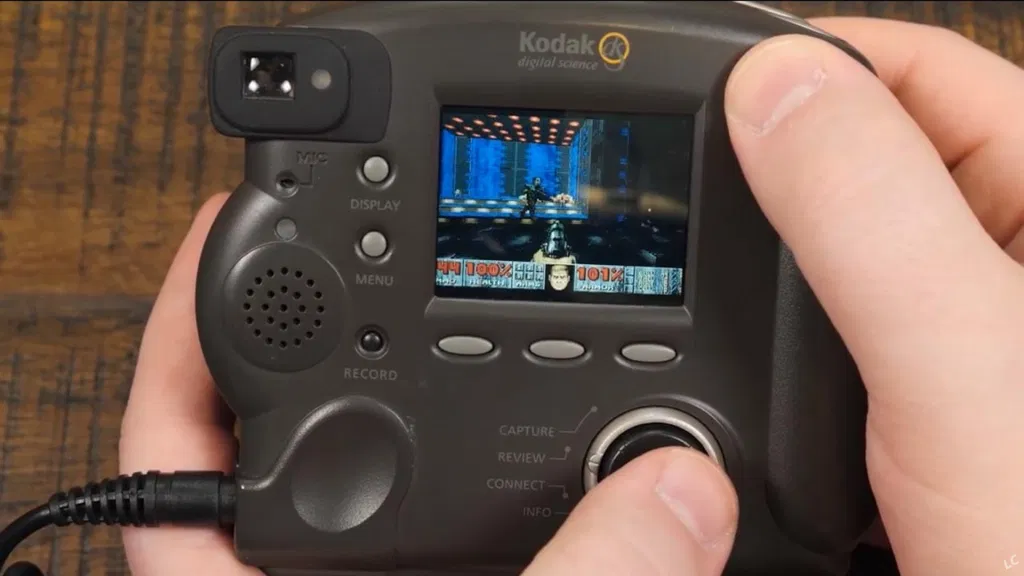
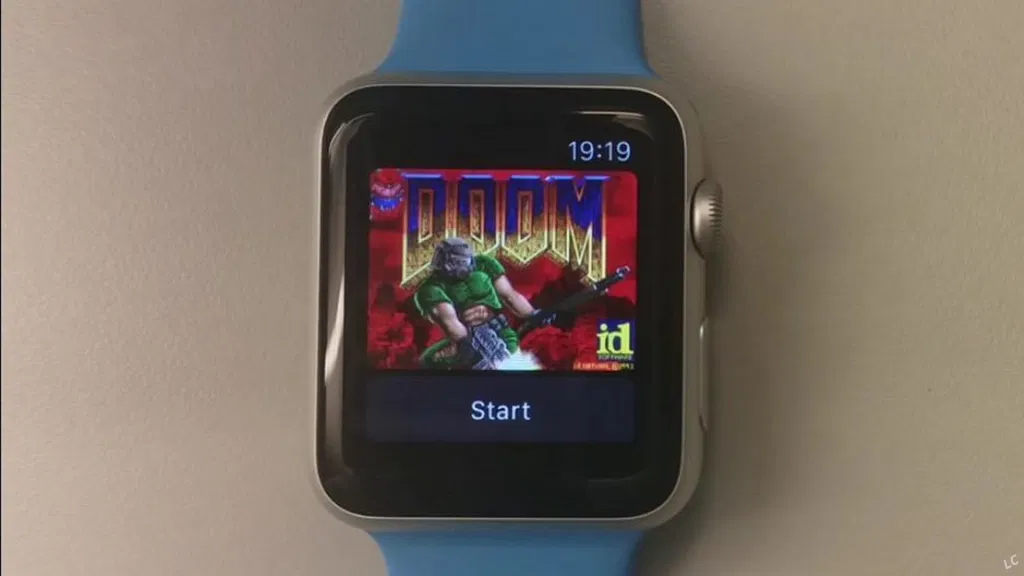
https://www.link-cable.com/top-10-weird-doom-ports/
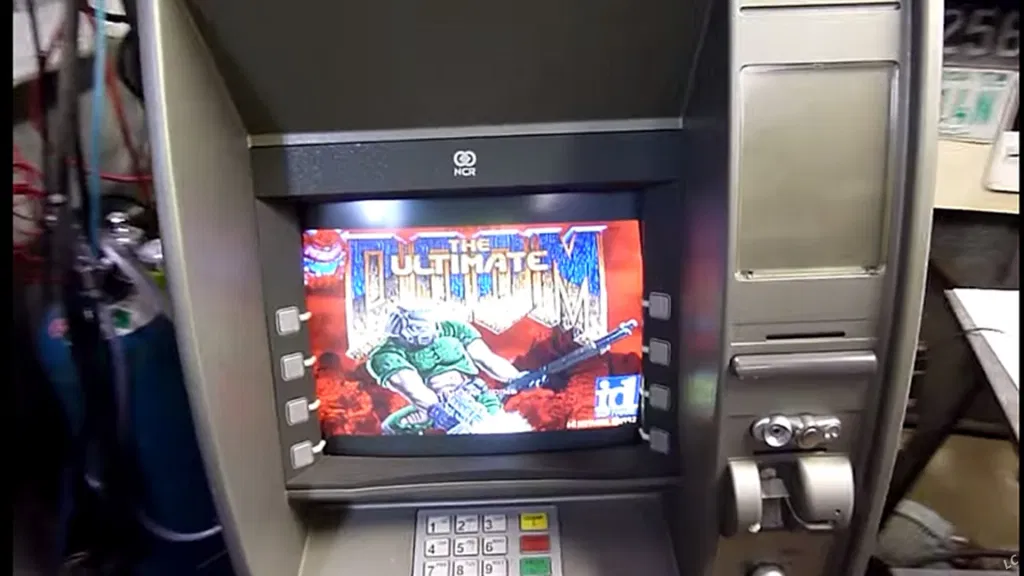
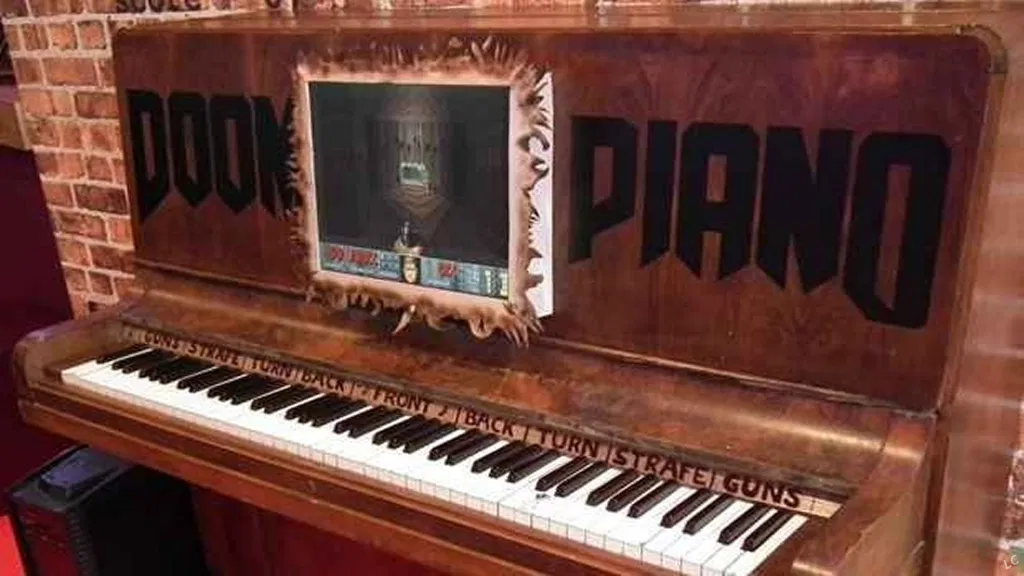
ManagedDoom
id-Software/DOOM
sinshu/managed-doom
yostane/MangedDoom-Blazor





Porting plan
- Clone sininshu/managed-doom
- Change the build target to WASM
- Re-implement SFML code:
- With mocks until the project compiles
- Then replace mocks with correct implementations
- Implemenet minimal JS (gameloop, audio and video rendering)
dall-e


Game loop in C#
while (waitForNextFrame()){
    const input = getPlayerInput();
    const { frame, audio }
            = UpdateGameState(input, WAD);
    render(frame);
    play(audio);
  }
Game loop in JS
function gameLoop(){
    if (canAdvanceFrame()){
      const input = getPlayerInput();
      const { frame, audio }
            = UpdateGameState(input, WAD);
      render(frame);
      play(audio);
    }
    requestAnimationFrame(gameLoop);
  }
  requestAnimationFrame(gameLoop);
using SFML.Audio; // Not available
namespace ManagedDoom.Audio
{
public sealed class SfmlSound : ISound, IDisposable
{
private SoundBuffer[] buffers;
}
}Example:
SFML.Audio.SoundBuffer
is not available
namespace SFML.Audio
  {
      public class SoundBuffer
      {
          public SoundBuffer(short[] samples, int v, uint sampleRate)
          {
            // TODO: implement
          }
      }
  }
So, let's implement it
first with a mock
namespace SFML.Audio
  {
      public class SoundBuffer
      {
          public short[] samples;
          private int v;
          public uint sampleRate;

          public SoundBuffer(short[] samples, int v, uint sampleRate)
          {
              this.samples = samples;
              this.v = v;
              this.sampleRate = sampleRate;
          }

          public Time Duration { get; internal set; }
      }
  }
After that, with a complete implementation
ManagedDoom V1 architecture
For loop (game loop)
pressed keys (keyup)
release keys (keydown)
['Z', 'Q']
['space']
Frame buffer
Audio buffer
SFML Audio
SFML Video
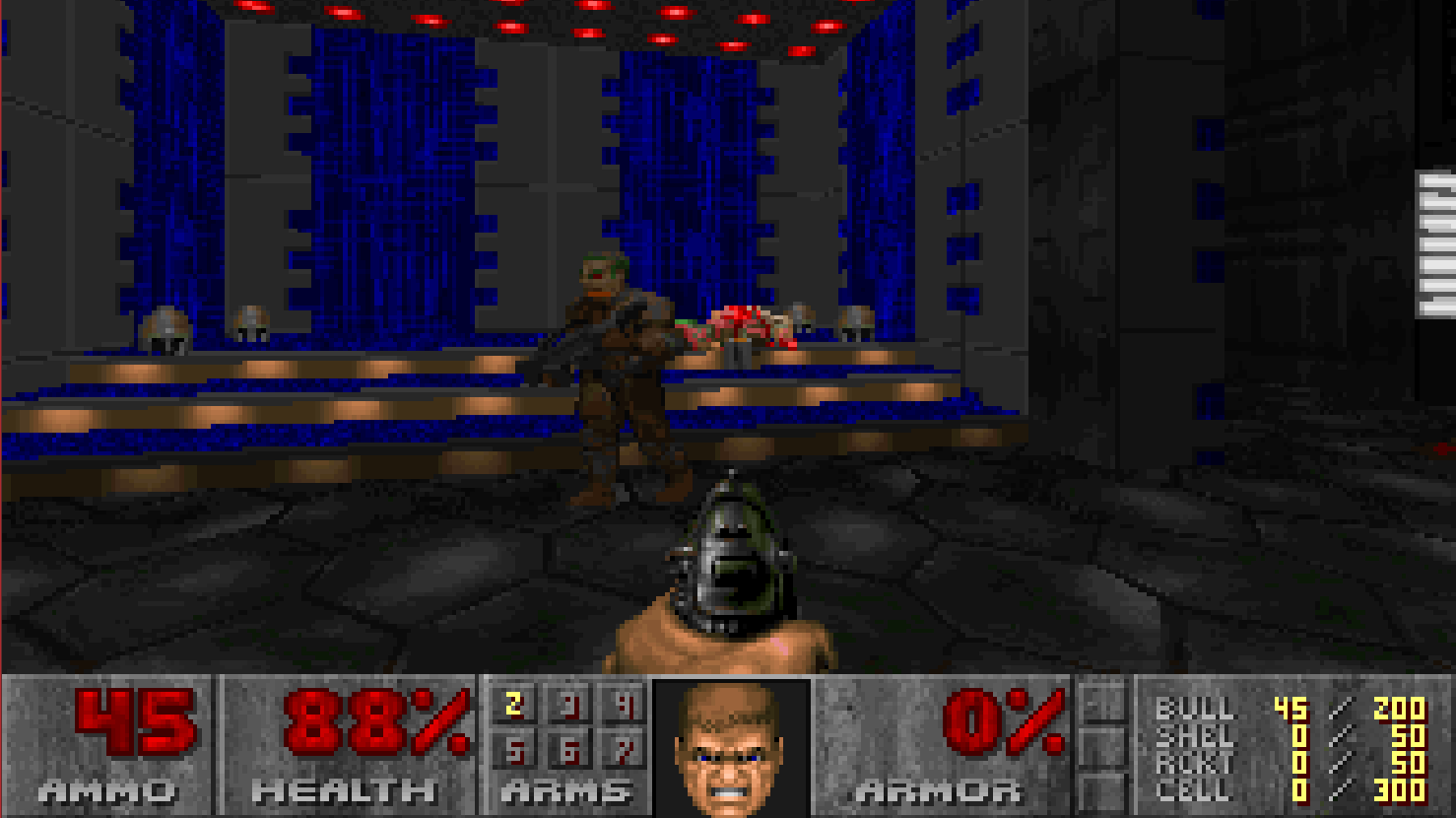
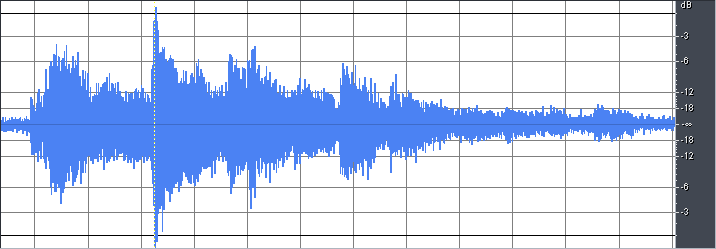
1 iteration of the Doom Engine
Updates the game state
.NET WASM
~70% OK
.NET WASM
wad
DOOM.wad
sf2
SoundFont.sf2
Blazor Doom architecture
pressed keys (keyup)
release keys (keydown)
['Z', 'Q']
['space']
wad
DOOM.wad
requestAnimationFrame
Run .Net
Audio buffer
Frame buffer
Canvas
Audio Context
Run JS
Run JS
1 iteration of the Doom Engine
Updates the game state
sf2
SoundFont.sf2


<html>
    <head>
      <!-- Sets .Net interop and starts the game loop -->
      <script type="module" src="./main.js"></script>
     </head>
    <body>
      <canvas id="canvas" width="320" height="200"
              style="image-rendering: pixelated" />
    </body>
  </html>
Entry point
Running the gameloop
main.js
import { dotnet } from "./dotnet.js";
  const { getAssemblyExports, getConfig } = await dotnet.create();
  const exports = await getAssemblyExports(getConfig().mainAssemblyName);
  await dotnet.run();

  function gameLoop(timestamp) {
      if (timestamp - lastFrameTimestamp >= 1000 / 30) {
          lastFrameTimestamp = timestamp;
          exports.BlazorDoom.MainJS.UpdateGameState(keys);
      }
      requestAnimationFrame(gameLoop);
  }
Running the gameloop
main.js
public partial class MainJS // this name is required
  {
    public static void Main()
    {
      app = new ManagedDoom.DoomApplication();
    }

    [JSExport] // Can be imported from JS
    public static void UpdateGameState(int[] keys)
    { // computes the next frame and sounds
       managedDoom.UpdateGameState(keys);
    }
  }
import { dotnet } from "./dotnet.js";
const { getAssemblyExports, getConfig } = await dotnet.create();
const exports = await getAssemblyExports(getConfig().mainAssemblyName);
await dotnet.run();
function gameLoop(timestamp) {
if (timestamp - lastFrameTimestamp >= 1000 / 30) {
lastFrameTimestamp = timestamp;
exports.BlazorDoom.MainJS.UpdateGameState(keys);
}
requestAnimationFrame(gameLoop);
}Audio playback
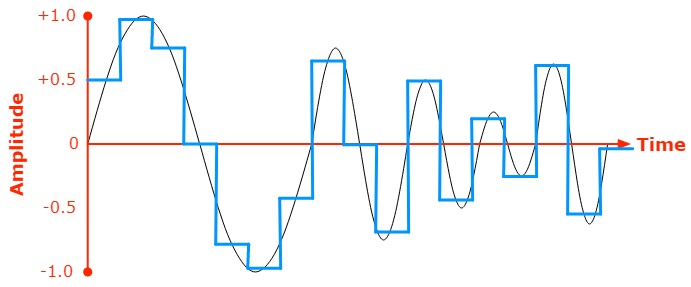
| 0.5 | 1 | 0.75 | 0 | -0.75 | -1 | -0.5 | 0 |
|---|
https://developer.mozilla.org/en-US/docs/Web/Media/Formats/Audio_concepts
AudioContext
Sample
1 / Sampling frequency
+ Sampling frequency
🔊
Audio playback
void PlayCurrentFrameSound(SoundBuffer soundBuffer)
  {
    int[] samples = Array.ConvertAll(soundBuffer.samples, Convert.ToInt32);
    BlazorDoom.Renderer.playSoundOnJS(samples, (int)soundBuffer.sampleRate);
  }
namespace BlazorDoom
{
[SupportedOSPlatform("browser")]
public partial class Renderer
{
[JSImport("playSound", "blazorDoom/renderer.js")]
internal static partial string playSoundOnJS(
int[] samples,
int sampleRate
);
}
}Audio playback
export function playSound(samples, sampleRate) {
      audioContext = new AudioContext({
          sampleRate: sampleRate,
      });
      const length = samples.length;
      const audioBuffer = audioContext.createBuffer(
          1,
          length,
          sampleRate
      );

      var channelData = audioBuffer.getChannelData(0);
      for (let i = 0; i < length; i++) {
          // noralize the sample to be between -1 and 1
          channelData[i] = samples[i] / 0xffff;
      }

      var source = audioContext.createBufferSource();
      source.buffer = audioBuffer;
      source.connect(audioContext.destination);
      source.start();
}| 0 | 1 | 2 | 3 | 1 | 1 | 2 | 3 |
|---|
| 0 | 1 | 2 | 3 |
|---|
From 1D frame to a 2D frame
| 2 | 2 | 0 | 1 |
|---|
Frame data
12 bytes
Color palette
Canvas Frame
12 * 4 bytes (r, g, b, a)
-
Doom uses color indexing
-
Image built from top to bottom and from left to right
Frame rendering: from C# to JS
namespace BlazorDoom
  {
      [SupportedOSPlatform("browser")]
      public partial class Renderer
      {
          [JSImport("drawOnCanvas", "blazorDoom/renderer.js")]
          internal static partial string renderOnJS(byte[] screenData,
                                                     int[] colors);
      }
  }
export function drawOnCanvas(screenData, colors) {
//
}public class DoomRenderer
{
// Called by updateGameState
private void Display(uint[] colors)
{
BlazorDoom.Renderer.renderOnJS(screen.Data, (int[])((object)colors));
}
}Rendering a Frame buffer
export function drawOnCanvas(screenData, colors) {
      const context = getCanvas().context;
      const imageData = context.createImageData(320, 200);
      let y = 0;
      let x = 0;
      for (let i = 0; i < screenData.length; i += 1) {
          const dataIndex = (y * width + x) * 4;
          setSinglePixel(imageData, dataIndex, colors, screenData[i]);
          if (y >= height - 1) {
              y = 0;
              x += 1;
          } else {
              y += 1;
          }
      }
      context.putImageData(imageData, 0, 0);
  }

  function setSinglePixel(imageData, dataIndex, colors, colorIndex) {
      // Get color from the color palette
      const color = colors[colorIndex];
      // Extract RGB and spread it in the canvas
      imageData.data[dataIndex] = color & 0xff; // R
      imageData.data[dataIndex + 1] = (color >> 8) & 0xff; // G
      imageData.data[dataIndex + 2] = (color >> 16) & 0xff; // B
      imageData.data[dataIndex + 3] = 255; // Alpha
  }



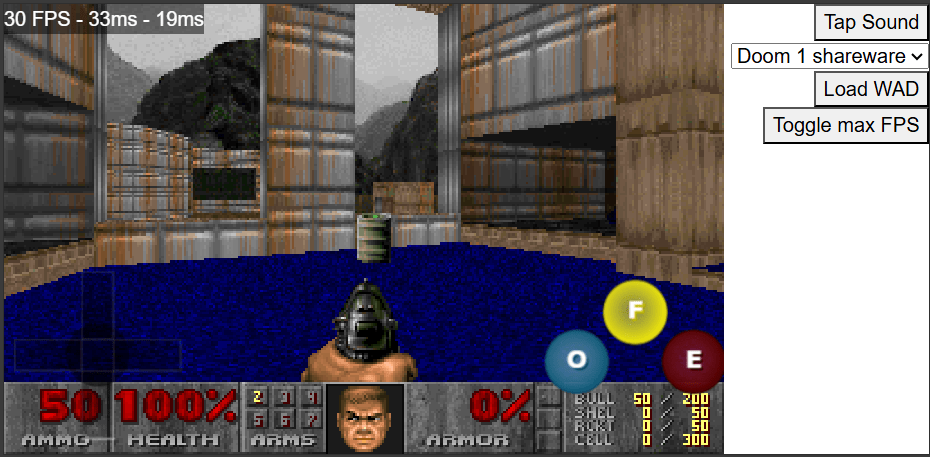
Shoot / validate
Open doors
Move
WAD selection


Key takeaways
- WASM possibilities are limitless
- Porting a game is way to learn programming while having fun




Feedback